You bend down to put on your shoes and there it is again.
Not your whole back.
Just one side.
Maybe it’s always the right side of your lower back. Maybe there’s a stubborn ache on the left side near your hip. Maybe one side feels tight after sitting, while the other feels completely normal.
And naturally, you start wondering:
Why does only one side of my back hurt?
It’s a good question.
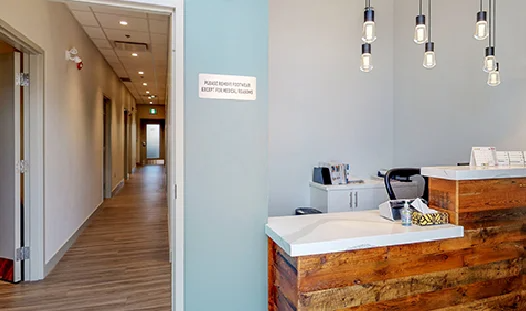
At ReVive Health Solutions in Kanata, we see people from Kanata, Stittsville, Nepean, Barrhaven, Carleton Place and across Ottawa with all kinds of back complaints—including discomfort that consistently appears on just one side.
Sometimes the explanation is relatively straightforward.
You may have irritated a muscle or joint on that side.
But sometimes the painful area is only one piece of a much bigger movement pattern.
Your hips, pelvis, upper back, feet, ankles, previous injuries and even the way you sit or stand can influence how your lower back handles movement and load.
And that’s where an osteopathic perspective gets interesting.
Instead of only asking:
“Where does it hurt?”
we also want to know:
“Why might this particular side be doing more work?”
Is One-Sided Back Pain Normal?
It can certainly happen.
Back pain doesn’t have to occur directly in the middle of your spine or equally on both sides.
Muscles and other soft tissues exist on either side of the spine, so irritation can absolutely be localized to one side. Cleveland Clinic notes that spontaneous one-sided back pain is often related to muscles, ligaments or joints, although there are also non-musculoskeletal causes that need to be considered.
One-sided pain may feel like:
- A dull ache
- Tightness
- A pulling sensation
- Sharp pain during certain movements
- A muscle spasm
- Pain near the pelvis
- Discomfort around the hip
- Pain extending into the buttock
- Burning or shooting discomfort
The pattern matters.
Does it hurt while sitting?
When standing?
When bending?
During walking?
After exercise?
First thing in the morning?
Does it travel into your leg?
Those details can help your healthcare practitioner understand what’s happening.
Your Back Isn’t Perfectly Symmetrical—and That’s Okay
Here’s something worth establishing immediately:
Human bodies aren’t perfectly symmetrical.
One shoulder might sit slightly higher.
You may naturally rotate more easily in one direction.
One hip may have a little more movement.
One foot may behave differently.
One leg may be stronger.
You may always carry your bag on the same shoulder.
You probably have a preferred leg when climbing stairs.
You may even stand on the same leg while waiting in line.
Most of these differences aren’t automatically problems.
But sometimes an asymmetry becomes significant enough that one area consistently handles more work.
Eventually that area may start complaining.
The Painful Side Isn’t Necessarily the Problem Side
This is one of the most useful concepts when talking about movement.
Imagine your left hip doesn’t rotate particularly well.
Your body still needs to rotate.
So perhaps your pelvis contributes differently.
Your lower back contributes more.
And eventually you feel pain on the right side of your lower back.
Naturally, you keep stretching the right side.
You massage it.
You put heat on it.
It feels better temporarily.
Then the pain returns.
Why?
Possibly because the right side isn’t the entire problem.
It’s simply the area that has been compensating.
That doesn’t mean this exact scenario explains every case of one-sided back pain.
It doesn’t.
But it illustrates why looking only at the painful spot can sometimes miss important information.
Your Hips Can Influence Your Lower Back
Your hips and lower back work closely together.
Walking requires movement through the:
- Feet
- Ankles
- Knees
- Hips
- Pelvis
- Spine
If one hip moves differently from the other, your body will adapt.
Maybe your stride becomes slightly shorter on one side.
Maybe your pelvis rotates differently.
Maybe your lower back contributes additional movement.
These changes can be subtle.
You probably won’t walk down the street thinking:
“Interesting. My right hip has approximately seven degrees less internal rotation today.”
You’ll simply walk.
Your body figures it out.
That’s what bodies are exceptionally good at doing.
Compensation Is Usually Helpful—Until It Isn’t
Compensation gets talked about as though it’s always a bad thing.
It isn’t.
Compensation is one of the reasons you can continue functioning when something isn’t working perfectly.
Imagine you sprain your ankle.
You immediately change the way you walk.
That’s useful.
Your body is protecting the injured area.
But what happens after the ankle heals?
Ideally, normal movement returns.
Sometimes it doesn’t return completely.
You may continue putting slightly more weight through the opposite leg.
Your knee adapts.
Your hip adapts.
Your pelvis adapts.
Your lower back adapts.
Months or even years later, the ankle doesn’t hurt at all.
Instead, your back does.
That’s why an osteopathic practitioner may ask about injuries that seem completely unrelated to your current complaint.
Yes, That Old Ankle Sprain Could Still Matter
This surprises people.
You come in with right-sided lower-back pain.
Then your osteopathic practitioner asks:
“Have you ever injured your left ankle?”
You think:
What does that have to do with anything?
Potentially quite a bit.
Your foot and ankle are where your body interacts with the ground.
Every step sends force upward through the leg.
If ankle movement changes, the knee and hip have to accommodate that difference.
The pelvis then has to accommodate what happens at the hip.
And the spine sits above the pelvis.
The body isn’t a collection of completely independent pieces.
It’s a coordinated system.
Your Feet Can Influence What’s Happening Above Them
Think about walking.
Your foot contacts the ground.
Your ankle moves.
Your knee responds.
Your hip responds.
Your pelvis rotates.
Your spine rotates.
Your arms swing.
Walking is a whole-body activity.
If something changes at the bottom of that chain, the effects can sometimes be noticed farther up.
This is also why ReVive’s multidisciplinary environment can be helpful. When appropriate, foot and lower-limb mechanics can be considered alongside the way the hips, pelvis and back are functioning.
Your Pelvis Plays a Major Role
The pelvis sits directly between your legs and spine.
It transfers force between your lower and upper body.
When you walk, your pelvis moves.
When you run, it moves.
When you bend, squat, climb stairs or get out of a chair, it moves.
If movement through the pelvis differs from one side to the other, your lower back may need to adapt.
That can sometimes contribute to the feeling that:
“It’s always the same side.”
An osteopathic assessment may therefore look at the pelvis even when the pain seems to sit slightly higher in the lower back.
What About the Sacroiliac Joint?
The sacroiliac—or SI—joints are located where the sacrum meets the pelvis.
Problems affecting this region can sometimes produce pain around the lower back, buttock, hip or thigh. Cleveland Clinic includes sacroiliitis among mechanical or structural conditions that can produce lower-back symptoms.
But this is another area where self-diagnosis gets tricky.
Pain near the SI joint doesn’t automatically mean the SI joint itself is the source.
Several structures can produce symptoms in similar areas.
That’s why assessment is more useful than pointing at a diagram online and deciding:
“That’s exactly where it hurts, so that must be what I have.”
Your Upper Back Can Affect Your Lower Back
This seems less obvious.
What could your upper back possibly have to do with one-sided lower-back pain?
Rotation.
Your thoracic spine—the middle and upper portion of your back—is designed to contribute to trunk rotation.
Think about walking.
Your arms swing.
Your rib cage rotates.
Your pelvis rotates.
Your spine coordinates those movements.
Now imagine your upper back rotates very comfortably toward the left but poorly toward the right.
Your body still needs to turn right.
So it may find that rotation somewhere else.
Sometimes the lower back contributes more.
Again:
Where you feel the symptom isn’t necessarily where the movement problem started.
One-Sided Pain After Sitting
This is incredibly common for desk workers.
You sit for two hours.
Stand up.
And one side of your lower back feels much tighter than the other.
Why?
Look at how you’re sitting.
Do you:
- Cross the same leg every time?
- Lean onto one armrest?
- Keep your wallet in a back pocket?
- Shift toward one side?
- Keep a second monitor off-centre?
- Rotate toward one side repeatedly?
- Tuck one foot underneath you?
None of these habits automatically causes back pain.
But repetition matters.
Two minutes in an asymmetrical position probably isn’t meaningful.
Six hours per day, five days per week, for several years?
That’s a lot of repetition.
Desk Work in Kanata Can Add Up Quickly
Many people working throughout Kanata and Ottawa’s west end spend significant portions of their day at a computer.
The typical routine can look something like:
Drive to work.
Sit.
Meeting.
Sit.
Lunch.
Sit.
Meeting.
Sit.
Drive home.
Sit during dinner.
Sit on the couch.
There isn’t necessarily anything wrong with any individual position.
The problem can be the lack of variety.
Your body likes movement.
And when movement disappears from your day, restrictions may become more noticeable.
Your Commute Matters Too
Let’s say you live in Carleton Place and commute toward Kanata or Ottawa.
You spend a significant amount of time sitting in your vehicle.
Then you sit at work.
Then drive home.
Maybe you’re slightly rotated while driving.
Maybe one leg is positioned differently because of the pedals.
Again, none of that means driving “causes” one-sided back pain.
But when we’re trying to understand your total movement exposure throughout the week, commuting matters.
Your body experiences your entire day—not just the hour you spend exercising.
Why One Side May Hurt After Standing
Some people don’t have problems sitting.
Their back hurts when they stand for a long time.
And often they notice something else:
They always stand on the same leg.
You’ve probably done this without thinking.
You stand in line and shift your weight onto your right hip.
A few minutes later, you’re still there.
You cook dinner standing mostly on the same side.
Talk to someone while leaning onto the same leg.
Stand at your desk with your weight shifted.
Again, asymmetry itself isn’t automatically bad.
But repeatedly loading the same side may matter for some people.
Carrying Children Can Create a Similar Pattern
Parents will know this one immediately.
Which hip do you carry your child on?
Probably the same one most of the time.
It’s comfortable.
It feels natural.
And you can probably carry them that way without even thinking about it.
But now imagine doing that every day.
Your pelvis shifts.
Your trunk leans.
One side works differently.
For months.
Sometimes years.
Your body adapts.
That doesn’t mean you need to stop carrying your child.
It simply means repetitive habits belong in the conversation when we’re trying to understand one-sided symptoms.
What About Carrying Bags?
Same idea.
Laptop bag.
Gym bag.
Heavy purse.
Tool bag.
Golf bag.
If you’re constantly carrying significant weight on one side, your body has to accommodate it.
An easy solution?
Switch sides when practical.
Or use a backpack when appropriate.
Simple changes can sometimes reduce unnecessary repetitive loading.
Golfers and One-Sided Back Pain
Golf is intentionally asymmetrical.
You don’t take half your swings right-handed and half left-handed.
You repeatedly rotate in the same direction.
That’s part of the sport.
For golfers throughout Kanata, Stittsville, Nepean and Carleton Place, maintaining adequate movement through the hips and thoracic spine can be particularly important.
If those areas don’t rotate well, the lower back may contribute more movement during the swing.
The goal isn’t to eliminate asymmetry from golf.
That’s impossible.
The goal is to make sure your body has enough mobility, strength and control to tolerate the activity you enjoy.
Hockey Is Asymmetrical Too
Hockey involves:
- Repetitive skating
- Rotation
- Stick handling
- Shooting predominantly from one side
- Contact
- Rapid acceleration
- Sudden changes of direction
Players naturally develop preferred movement patterns.
Again, that’s not inherently a problem.
But if you’re playing once or twice a week while spending the rest of your week at a desk, your body is moving between two very different physical demands.
That can expose restrictions.
Running Can Reveal Small Differences
Running involves thousands of repeated steps.
A tiny difference between sides may not matter during ten steps.
Over 10 kilometres?
Now you’ve repeated it thousands of times.
That’s why runners with one-sided back pain may benefit from having more than their lower back assessed.
Hip mobility.
Ankle movement.
Strength.
Pelvic control.
Previous injuries.
Training volume.
All of those pieces may matter.
The Weekend Warrior Pattern
Here’s a familiar Ottawa routine.
Monday:
Desk.
Tuesday:
Desk.
Wednesday:
Desk.
Thursday:
Desk.
Friday:
Desk.
Saturday morning:
Hockey.
Then golf.
Then six hours of landscaping.
Sunday:
“Why does my back hurt?”
Your body probably isn’t angry that you moved.
It may simply not have been adequately prepared for the sudden jump in demand.
Consistent activity throughout the week can help close that gap.
Why Stretching the Painful Side May Not Solve It
This is one of the biggest traps.
Right side hurts.
Stretch right side.
Makes sense.
And it may feel great.
But suppose the right side is already moving excessively because the left hip isn’t contributing enough.
Aggressively stretching the right side even more may not address the underlying pattern.
Or suppose the muscle feels tight because it’s working hard to stabilize an area.
Again, stretching may provide temporary relief without changing why that muscle keeps tightening.
The lesson isn’t:
Never stretch.
It’s:
Don’t assume tight automatically means short.
Sometimes Strength Is More Important Than Flexibility
If an area is working hard because it lacks strength or control, endless stretching isn’t necessarily the answer.
Your body needs both:
Mobility and stability.
You need enough range of motion to perform the task.
And enough strength to control that range.
That’s why a complete plan for recurring back discomfort may include strengthening and movement work alongside hands-on care.
Stress Can Make One-Sided Pain Feel Worse
Stress isn’t imaginary.
It produces real physiological and behavioural changes.
You might:
- Clench your jaw
- Raise your shoulders
- Sleep poorly
- Exercise less
- Breathe differently
- Hold more muscular tension
Mayo Clinic notes that stress can contribute to muscle tension associated with back pain.
Again, that doesn’t mean:
“Your back pain is just stress.”
That’s overly simplistic.
It means stress is one of many factors that may influence how you experience musculoskeletal discomfort.
Sometimes One-Sided Back Pain Isn’t Actually Coming From Your Back
This section is important.
Not all pain felt in the back is musculoskeletal.
Internal conditions can sometimes produce pain that is felt in the back, including on one side.
For example, kidney infections and kidney stones can cause one-sided back or flank pain, and other abdominal or pelvic conditions can sometimes refer pain toward the back.
That doesn’t mean you should assume one-sided back pain is coming from an organ.
Most cases aren’t.
But it does mean we shouldn’t automatically treat every pain near the back as a tight muscle.
Could One-Sided Back Pain Be Kidney Pain?
It can be in some situations.
Kidney-related discomfort may be felt higher in the back or flank, around the area between the lower ribs and hips.
Other symptoms can be important clues.
For example:
- Fever
- Chills
- Painful urination
- Blood in the urine
- Nausea
- Changes in urination
Cleveland Clinic notes that kidney infection or kidney stones can produce one-sided back pain alongside urinary or systemic symptoms.
If those symptoms are present, that’s a medical issue—not something to simply treat with manual therapy.
What About Sciatica?
Sciatica is another reason someone may experience predominantly one-sided symptoms.
The discomfort can travel from the lower back or buttock into the leg and may be associated with tingling, numbness or weakness.
Back pain that spreads down a leg—particularly when neurological symptoms are present—deserves appropriate assessment.
Not every pain in the buttock is sciatica.
And not every leg symptom originates from the same structure.
That’s why proper evaluation matters.
Do I Need an MRI for One-Sided Back Pain?
Not automatically.
This is a common concern.
People think:
“It keeps hurting on the right side. Should I get an MRI?”
Imaging can be extremely valuable when clinically indicated.
But many episodes of back pain don’t require immediate imaging, and structural findings on scans don’t always explain someone’s symptoms. Mayo Clinic notes that back pain can occur without a cause that appears on imaging, while some disk changes can appear on scans without causing pain.
Your healthcare provider can determine whether imaging is appropriate based on your history, symptoms and examination.
How Does an Osteopathic Practitioner Look at One-Sided Back Pain?
This is where we come back to the whole-body perspective.
At ReVive Health Solutions, an osteopathic assessment for recurring one-sided back discomfort may include looking at:
- Lumbar spine mobility
- Pelvic mechanics
- Hip mobility
- Thoracic spine movement
- Rib cage movement
- Knee mechanics
- Ankle mobility
- Foot mechanics
- Muscular tension
- Fascial restrictions
- Walking patterns
- Previous injuries
- Everyday movement habits
Not every patient needs every area treated.
The assessment determines what’s relevant.
Why Might an Osteopath Treat Somewhere That Doesn’t Hurt?
Because pain location and contributing factors aren’t always identical.
Imagine the left hip is restricted.
The pelvis adapts.
The right lower back begins contributing additional movement.
Eventually the right side becomes sore.
In that situation, only treating the painful tissue may overlook an important contributor.
An osteopathic approach looks for relationships.
That might mean working with the hip.
Or pelvis.
Or upper back.
Or ankle.
Or the painful area itself.
Often it’s a combination.
What Does Osteopathic Treatment Involve?
Treatment is individualized to the patient.
Depending on assessment findings, osteopathic manual care may involve:
- Gentle joint mobilization
- Soft-tissue techniques
- Fascial techniques
- Movement-focused approaches
- Treatment of related areas contributing to compensation
The goal isn’t to force your body into perfect symmetry.
Perfect symmetry isn’t realistic.
Instead, the aim is to improve function and reduce unnecessary restrictions that may be contributing to your symptoms.
Why Your Back Pain Keeps Returning
This is probably the most important question for someone who has been dealing with the same side hurting for months.
Maybe you get treatment.
It feels better.
Two weeks later:
Same spot.
Again.
Sometimes the reason is simple:
The demands haven’t changed.
You still sit eight hours without moving.
Still carry your child on the same hip.
Still train hard only on weekends.
Still have limited hip mobility.
Still haven’t regained ankle movement after that old injury.
Still sleep poorly.
Still avoid strength training.
Hands-on treatment can be one piece of the solution.
But your body experiences the other 167 hours of the week too.
Those hours matter.
What Can You Do at Home?
If your symptoms are mild and there are no concerning features, there are some practical things you can start considering.
Move More Frequently
You don’t need an elaborate mobility routine.
Stand up.
Walk.
Change positions.
Your body benefits from variety.
Stop Always Standing on the Same Leg
Notice your habits.
If you’re always hanging into the same hip, periodically shift.
You don’t need perfect symmetry.
Just give your body options.
Switch Carrying Sides
If practical, alternate which side you use for bags or other loads.
Walk
Walking introduces coordinated movement throughout the body.
It doesn’t need to be intense.
A few short walks throughout the day can be easier to maintain than one huge exercise session.
Build Strength
Your hips, legs and trunk need enough capacity for your daily activities.
A progressive strengthening program can be an important part of managing recurring back problems.
Don’t Aggressively Stretch Through Pain
Gentle movement can feel helpful.
Sharp pain is different.
Don’t assume forcing more range is always beneficial.
Should You Rest?
Complete bed rest generally isn’t recommended for routine back pain.
MedlinePlus notes that most acute lower-back pain improves and that evaluation often considers appropriate exercise and movement rather than prolonged inactivity.
Mayo Clinic similarly notes that most back pain improves over time and that prolonged bed rest isn’t generally recommended.
That doesn’t mean you should ignore severe pain and train through it.
It means appropriate, comfortable activity is often preferable to becoming completely inactive.
When Should One-Sided Back Pain Be Assessed?
Consider having your back assessed if the discomfort:
- Keeps returning
- Is becoming more frequent
- Persists for several weeks
- Limits normal movement
- Interferes with sleep
- Changes how you walk
- Makes work difficult
- Travels into the leg
- Is accompanied by numbness or tingling
- Began after an injury
Mayo Clinic recommends medical assessment for back pain that persists, becomes severe, spreads down the leg or is associated with weakness, numbness, tingling or unexplained weight loss.
When One-Sided Back Pain Needs Prompt Medical Attention
Most one-sided back pain isn’t an emergency.
But certain symptoms deserve prompt medical attention.
Seek appropriate urgent medical care for symptoms such as:
- New bowel or bladder control problems
- Significant weakness
- Severe numbness
- Fever accompanying back pain
- Significant trauma
- Severe or rapidly worsening pain
- Unexplained weight loss
- Significant abdominal pain or throbbing
- Back pain with concerning urinary symptoms
Mayo Clinic identifies new bowel or bladder problems, fever and pain following significant trauma among reasons to seek immediate care.
Those aren’t situations to simply “wait and see” with manual therapy.
Don’t Automatically Blame Your Spine
If there’s one thing we want you to take from this article, it’s this:
Back pain is not always just a back problem.
Your spine matters.
Of course it does.
But so do your:
Hips.
Pelvis.
Feet.
Ankles.
Upper back.
Muscles.
Strength.
Previous injuries.
Daily habits.
Work environment.
Activity level.
Recovery.
Your body works as a system.
Looking at that system can sometimes explain why one small area keeps getting overloaded.
One-Sided Back Pain in Desk Workers
If you work at a desk in Kanata, Nepean, Barrhaven or elsewhere in Ottawa, pay attention to how you spend your day.
Not whether your posture is “perfect.”
Instead ask:
Do I move enough?
Can you walk during a call?
Stand during a meeting?
Change your sitting position?
Go outside at lunch?
Take the stairs?
Walk for ten minutes after work?
Small amounts of movement repeated consistently can be surprisingly valuable.
One-Sided Back Pain in Active Adults
Maybe you’re not sedentary at all.
You run.
Golf.
Play hockey.
Lift weights.
Cycle.
Ski.
That’s great.
But active people develop repetitive movement patterns too.
If your pain consistently appears during the same activity or on the same side, look at:
- Training volume
- Recovery
- Technique
- Strength
- Mobility
- Previous injuries
Being active doesn’t make you immune to compensation.
It simply creates different physical demands.
Osteopathy for One-Sided Back Pain in Kanata
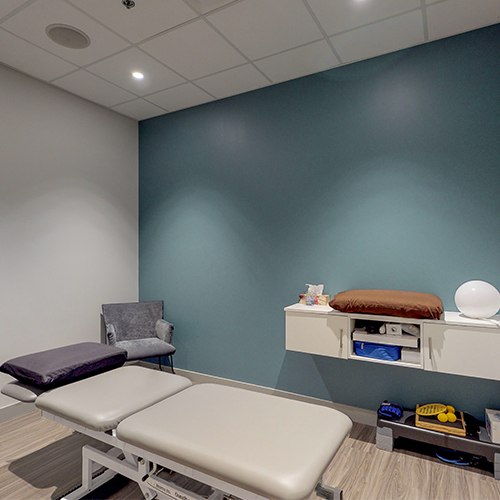
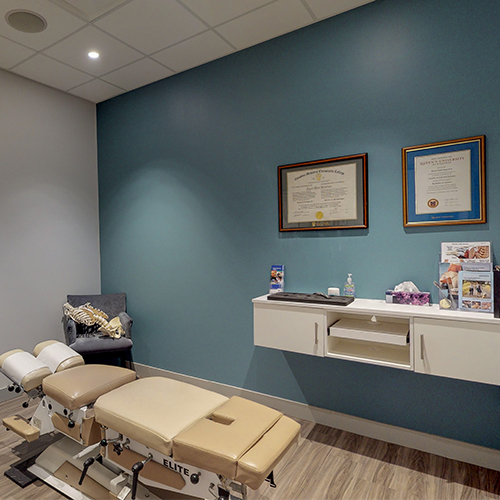
At ReVive Health Solutions in Kanata, our osteopathic practitioners work with patients experiencing back discomfort, mobility restrictions and recurring musculoskeletal symptoms.
Our approach looks beyond the painful area.
We want to understand:
How is your body moving?
Where is movement limited?
Where might you be compensating?
What happened previously?
What does your everyday life demand from your body?
Those questions help create a treatment approach specific to you rather than treating every back complaint exactly the same way.
We welcome patients from Kanata, Stittsville, Nepean, Barrhaven, Carleton Place and across the greater Ottawa area.
The Bottom Line
If one side of your back keeps hurting, don’t automatically assume that side is simply “too tight.”
It might be.
But there may be more to the story.
Your hip could be contributing.
Your pelvis could be moving differently.
An old ankle injury might have changed your walking mechanics.
Your upper back may not be rotating well.
Your workday may involve hours of repetitive positioning.
Your weekend activity may exceed what your body is currently prepared to tolerate.
Or the pain could have a cause that needs medical evaluation.
The point isn’t to guess.
It’s to assess.
Because sometimes the area that’s hurting the loudest isn’t the place where the conversation needs to begin.
Frequently Asked Questions About One-Sided Back Pain
Why does my back hurt only on one side?
One-sided back pain can result from muscles, ligaments, joints, spinal conditions, repetitive movement or other medical causes. Soft-tissue and musculoskeletal causes are common, but persistent symptoms should be properly assessed.
Is it normal to have lower-back pain on only the right side?
Yes, back pain can occur predominantly on one side. Right-sided pain can come from musculoskeletal structures, but internal conditions can also produce one-sided symptoms, so the overall symptom pattern matters.
Can my hip cause one-sided lower-back pain?
Hip movement influences the pelvis and lower back. When one hip moves differently, other areas may compensate. An assessment can help determine whether hip mechanics are relevant to your symptoms.
Can an old ankle injury affect my back?
Potentially. An ankle injury may temporarily change the way you walk, and if movement limitations persist, the knee, hip, pelvis and spine may adapt around them.
Why does the same side of my back keep getting tight?
Recurring tightness may relate to repetitive loading, movement restrictions, strength, work habits, previous injuries or compensation elsewhere in the body. The sensation of tightness alone doesn’t identify the cause.
Could one-sided back pain be my kidney?
Kidney infections and kidney stones can sometimes cause one-sided back or flank pain. Fever, urinary changes, painful urination, blood in the urine or other systemic symptoms are reasons to seek appropriate medical assessment.
Can sciatica cause pain on only one side?
Yes. Sciatic symptoms commonly affect one side and may include pain extending through the buttock or leg, sometimes with numbness, tingling or weakness.
Should I stretch the side that hurts?
Gentle movement may be appropriate, but repeatedly stretching the painful side isn’t always the answer. The area may be compensating for a restriction or weakness elsewhere.
Can osteopathy help one-sided back pain?
Osteopathic practitioners assess the spine alongside the hips, pelvis and other related areas. When musculoskeletal restrictions or compensation patterns are contributing, individualized hands-on osteopathic care may be one part of the management plan.
Do I need an MRI for one-sided back pain?
Not necessarily. Many cases of back pain don’t require immediate imaging, and imaging findings don’t always correspond with symptoms. Your healthcare professional can determine whether imaging is appropriate based on your history and examination.
When should I worry about one-sided back pain?
Seek medical attention for significant or worsening neurological symptoms, new bowel or bladder problems, fever with back pain, major trauma, unexplained weight loss, or other concerning symptoms. Persistent or worsening pain should also be assessed.
Where can I find osteopathic care for one-sided back pain near Kanata?
ReVive Health Solutions provides osteopathic care in Kanata and serves patients from Stittsville, Nepean, Barrhaven, Carleton Place and throughout greater Ottawa.